




Welcome to Bookstorm
Bookstorm is a boutique book publishing company offering focused experience and innovation in the creation of books for the South African market. The company was started by Basil van Rooyen and Louise Grantham. We publish books for the general reading public in South Africa – books that will have a market in South African bookshops. Our focus is currently on non-fiction books for adult readers.


Book Extracts
- Men and Mental Health – Shattering the Silence
- It Always Seems Impossible - My fight to build and save Education Africa
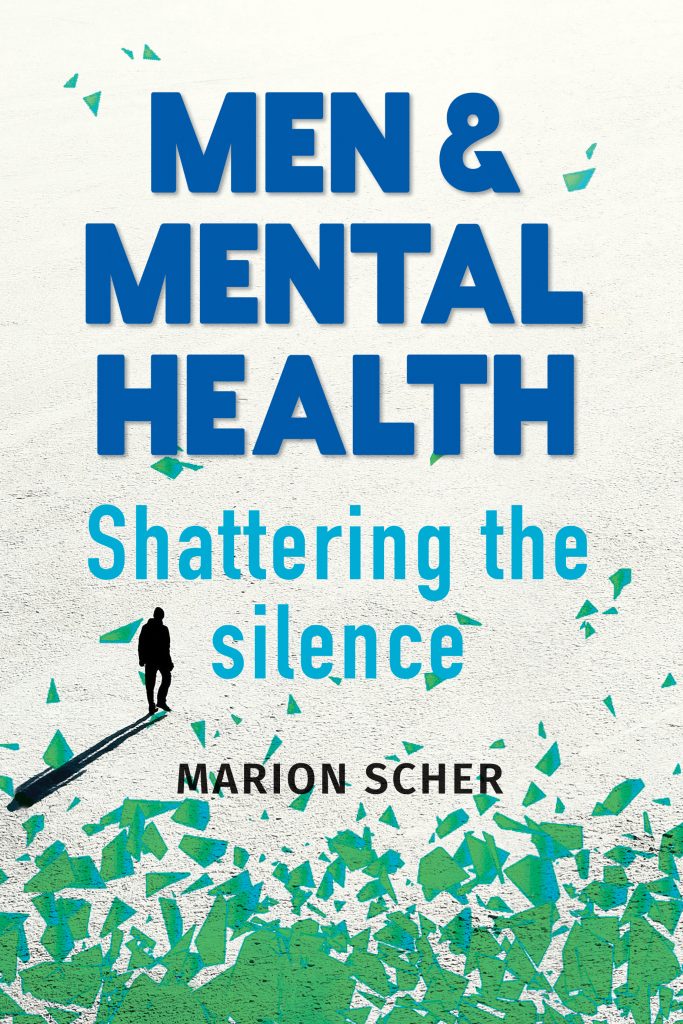 Author Marion Scher
FOREWORD
There is a weight that comes with leadership. It’s a quiet burden, carried in long hours, relentless expectations and the unspoken rule that you should always be in control. As the CEO of Sun Pharma, a large pharmaceutical company, I’ve felt it in boardrooms, in crisis meetings and in the late hours when sleep is a luxury.
Stress is a given, but in South Africa, it’s compounded by realities that many of our global counterparts simply don’t face. Economic volatility, crime, inequality – these are not abstract challenges: they are lived experiences that add layer upon layer to the silent pressure that many men carry.
I’ve watched colleagues buckle under this weight. I’ve seen men – brilliant, driven, accomplished – walk away from careers they built over decades, consumed by stress, anxiety and depression they never felt they could talk about. I’ve seen others stay, but at a cost: fractured relationships, declining health, and a constant, gnawing exhaustion that no amount of resilience can fully withstand.
For years, I thought I was immune to it. I believed that as long as I pushed harder, worked longer and ignored the warning signs, I could keep going. But burnout isn’t something you see coming. It doesn’t announce itself with a clear signal. It creeps in, disguising itself as efficiency, as dedication, as strength − until one day you realise that you’re running on empty.
This book is one that should have been written a long time ago. It’s a much-needed intervention in a world where men are expected to be unbreakable, where vulnerability is still too often mistaken for weakness. The stories in these pages aren’t about failure, they’re about courage. They’re about breaking the silence that surrounds men’s mental health. They’re about reshaping what it means to be strong.
The statistics are sobering. South African men are four times more likely to take their own lives than women. The pressure to perform, to provide, to never show any chinks in the armour, is a dangerous illusion, one that has cost too many lives. And yet within corporate culture, within sport, within society at large, we continue to perpetuate it.
The men who have shared their experiences in this book, men who have achieved extraordinary things, are proving that it doesn’t have to be this way: that true resilience isn’t in suppressing struggle, but in facing it head-on; that leadership isn’t about being untouchable but about knowing when to ask for help.
As someone who has lived in the high-stakes world of leadership and who has witnessed first-hand the toll it takes, I can only hope that this book reaches the men who need it most, that it sparks conversations in workplaces, in locker rooms and in homes, and that it challenges the outdated beliefs that continue to cost lives.
Mental health is not a luxury. It’s not a ‘nice-to-have’. It’s as vital as physical health, and ignoring it doesn’t make it disappear. If we as men, as leaders, as fathers and sons and brothers, begin to treat it with the seriousness it deserves, we can begin to change the narrative.
This book isn’t just about survival. It’s about creating a world where men are allowed to thrive, not in silence, not in suffering, but in the full recognition that strength isn’t about enduring alone. It’s about being human, and that is something worth fighting for.
It is indeed a privilege for Sun Pharma to be associated with a book that has the ability to not only change lives, but to also save them.
Malcolm Brown
Chief Executive Officer
Sun Pharma South Africa
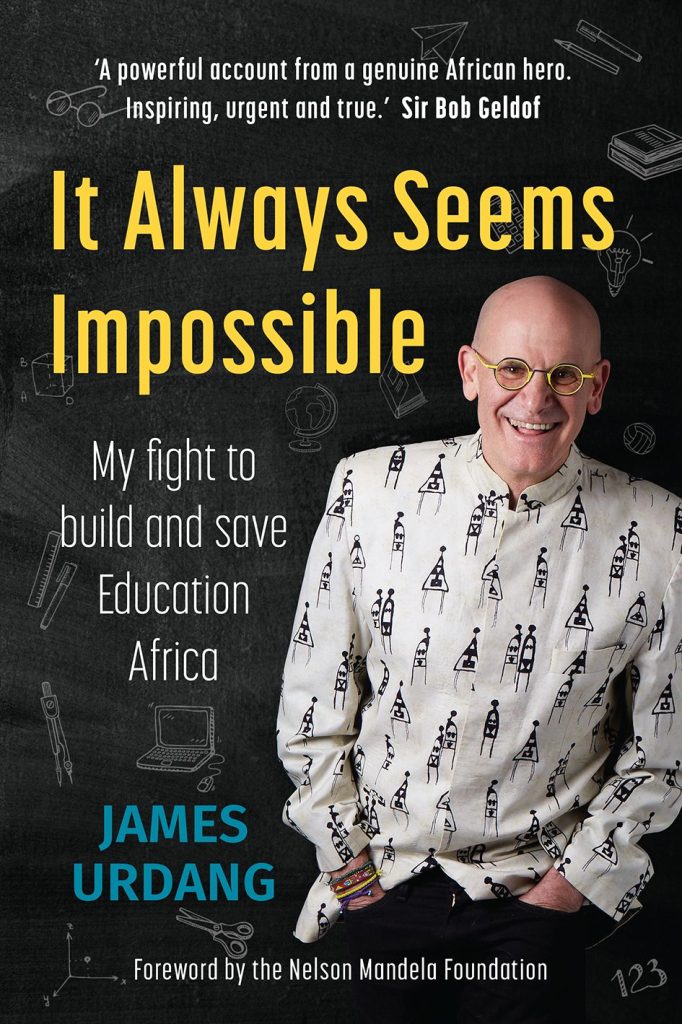
Author James Urdang
Foreword
by The Nelson Mandela Foundation
FOREWORD
THERE’S SOMETHING powerful about a story that begins in personal struggle and ends in collective impact. James
Urdang’s memoir is one such story – a compelling, honest and deeply human account of what it means to transform adversity into action, and personal vision into social change.
It charts a journey from a childhood weighed down by learning
challenges like dyslexia and ADHD, to the creation of one of South Africa’s most dynamic, education-focused non-profit
organisations: Education Africa. But it is the establishment of Masibambane College, a school in the informal settlement of
Orange Farm, which for a number of years has been achieving outstanding results, that best demonstrates James’s determination to meet adversity head-on.
James writes the way he speaks: with urgency, clarity and a deep conviction that education is not only a right but a responsibility we all share. This book brings you face to face with that conviction,
while also revealing the many bumps, setbacks and learning curves that come with trying to build something meaningful and lasting in the world of development.
One of the most remarkable aspects of James’s journey is his enduring connection to Nelson Mandela and Walter Sisulu. It was a connection built on trust, especially with Sisulu, who was not only a mentor but moral compass by which James measured his life and work. One of Madiba’s most cited quotes is ‘education is the most powerful weapon we can use to change the world’, and this book reflects that spirit, not just in grand achievements but in the quiet moments of doubt, the small victories and the hardearned wisdom that comes from decades of doing the work.
This book is about building – schools, yes, but also relationships, trust, networks and ideas. It’s about servant-leadership, a kind of leadership that doesn’t seek the spotlight but rather channels its energy into uplifting others. James never tries to present himself
as the hero of this story. Instead, he shines a light on the students, teachers, donors and partners who’ve all contributed to the work along the way. That humility, paired with relentless drive, is what gives this memoir its authenticity.
As head of archive and research at the Nelson Mandela Foundation, I received drafts of the memoir that had anything
to do with Madiba, be it an event or a quote, to fact-check it for accuracy and authenticity. James was relying only on memory but wanted to ensure that everything was correct and accounted for.
At a time when so many of our systems feel broken, when inequality seems insurmountable and hope can feel like a luxury, this story is a powerful reminder that change is still possible. That vision, anchored in values, can move mountains – that the greatest legacies are built not on personal success but on the opportunities
we create for others.
Whether you’re an educator, a business leader, a donor, a policymaker or simply someone who cares about making the world a better place, you’ll find something in these pages that speaks to you. James’s story will challenge you to reflect on your own journey, your own values and your own potential to make a difference.
What makes this book particularly compelling is that it doesn’t try to oversimplify the complex nature of social change. It acknowledges the politics, the partnerships, the power dynamics.
But it also insists that we must try anyway, that even in the face of setbacks the work is worth doing, that transformation is possible if we stay rooted in purpose and committed to people.
James Urdang’s journey is far from over but this memoir captures the essence of what it means to lead with heart, to serve
with humility and to believe – truly believe – that every child, no matter where they come from, deserves a fighting chance.
So, as you begin this book, I invite you to do more than just read it. Let it move you. Let it stir something in you. Let it remind
you that, as Madiba said, ‘Education, more than anything else, improves our chances of building better lives.’
Because somewhere out there, a student is waiting. And someone like James is showing us what’s possible.
Razia Saleh
Head: Archive and Research
Nelson Mandela Foundation
Johannesburg, 2025